25% of the population lacks the cognitive abilities to reach a good level of language proficiency, which is essential.

A question that often arises is that of destiny. Do we really have control over our lives?

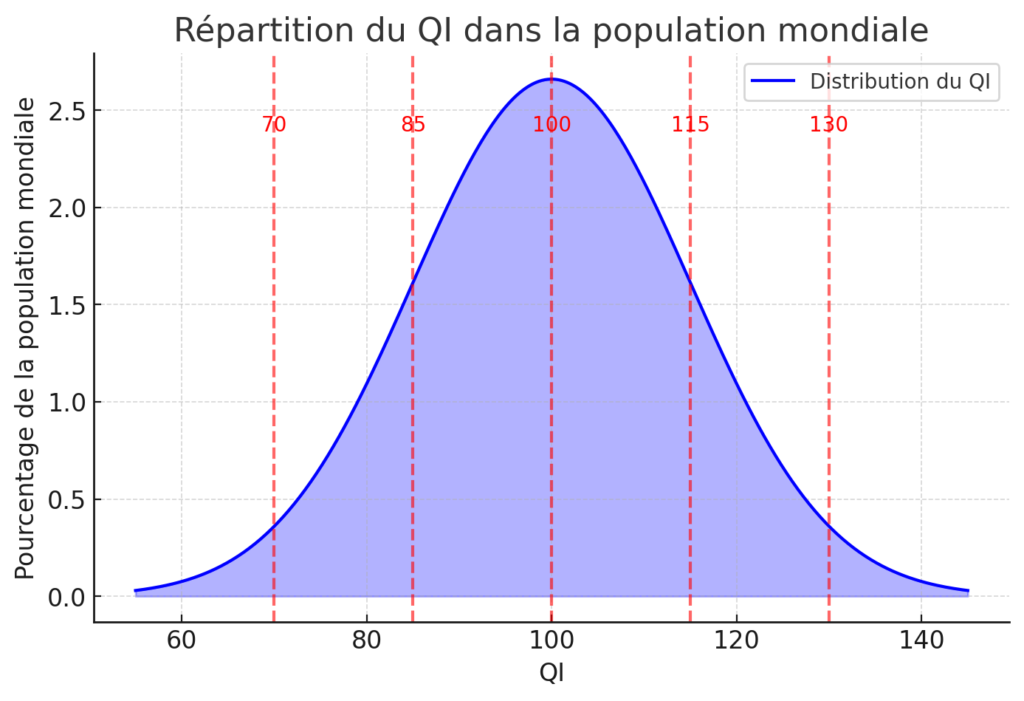
Since I need to find a job, I find myself in the situation of someone who belongs to the 25.25% of the world’s population with an IQ lower than 90, which is supposedly the IQ necessary to use a language adequately for all administrative tasks.
If I’m not completely illiterate in Japanese, I’m far from a native level when it comes to topics or subjects I haven’t covered. This goes without saying, but “instant knowledge” doesn’t exist; we only know what we’ve learned.

The point of today’s reflection is not to feel sorry for myself, but rather to highlight the difficulties that more than a quarter of the world’s population face on a daily basis.

Not being comfortable reading is not just a burden for reading but also for learning, obviously. And someone struggling in their language will face other additional difficulties, such as the fear of expressing themselves, the fear of mockery, a sense of inferiority, and self-denial.

We quickly forget these differences, and we judge too quickly, in a more general way.

Does a person not express themselves, for example, because they don’t want to, or because they can’t?

Does the fact that the vast majority of people have no issues with language mean we should disregard others? Just because they don’t have the necessary abilities to do so?

The example of language is easy to understand for an expatriate who doesn’t master the language of the country they live in.

Immigration is a complicated issue. But in very simple terms, if there is no “need” to leave one’s country in the first place, there would be no immigration.

Looking at things from a global perspective, it almost becomes obvious that to solve immigration problems, providing the necessary resources to the countries of the people who emigrate is one of the key factors.

The reasons for fleeing one’s country are diverse, of course. But extreme poverty, malnutrition, and directly linked to these, lack of education, are among the determining factors.

Anyway, I need to work on my Japanese.

Our latest tales

  • A Common Resonance

    A Common Resonance

    For this lesson, which was considered one of the most difficult, Faya put a great deal of effort into teaching the Espers about resonance. Though Faya preferred to put things into practice, this lesson was particularly abstract, which is why she asked the other Shapes to help her. “The most difficult part about resonance,” said

    Read more

  • For your loved ones

    For your loved ones

    Kenko and Gurumin worked together on this course about health and how to promote it, so that even the reluctant Espers would try their best. “I’m free to do as I like!” said a young Esper who didn’t enjoy listening to advice. “Yes, of course you are,” said Gurumin gently. “But why can’t I skip

    Read more

  • Put things into perspective

    Put things into perspective

    You can only see the world through your own perspective. But understanding that is, in itself, a big step toward becoming more aware of your surroundings. Why is it important? Because putting things into perspective helps you face difficulties with greater resolve, feel more empathy for others’ situations, and think more critically. What if I

    Read more

  • A Child’s Heart

    A Child’s Heart

    At the Great Library of Esperia, there was a special space dedicated to children. The Seven Shapes soon came to understand the importance of children for a society that sought peace. They realized that the qualities children naturally possessed were the very qualities adults needed to preserve for true harmony to exist. Indeed, a child’s

    Read more

  • I don’t know

    I don’t know

    The young Espers were surprised by this lesson from Vati, the Shape of Wisdom. They believed Vati knew everything—that no question was ever left unanswered—since she was respected as the wisest of all in Esperia. Yet, it was Vati who said “I don’t know” the most. Ironic, isn’t it? But having the courage to accept

    Read more

  • A common world

    A common world

    The presence of Atma, the Shape of Balance, made it easy for the Espers to remember the importance of maintaining equilibrium across their entire planet. Because they understood that they all shared the same common world, it became evident to them that they should cherish the land that provided their food and the natural Aether

    Read more

  • Grief

    Grief

    Losing a loved one may be the most tragic event you ever experience. Naturally, the closer the person, the more devastating the loss. It can feel as though the world has ended, and your thoughts will revolve entirely around the fact that the one you love is gone. Because of how the brain works, time

    Read more

  • Mother’s Milk

    Mother’s Milk

    If every individual on this Earth is unique, then to us, our mother is even more unique. A natural bond is formed during pregnancy and through breastfeeding, a period when, as newborns, we are entirely dependent on our parents’ care and love. How we feel about our parents will naturally change with time and circumstances.

    Read more