25% of the population lacks the cognitive abilities to reach a good level of language proficiency, which is essential.

A question that often arises is that of destiny. Do we really have control over our lives?

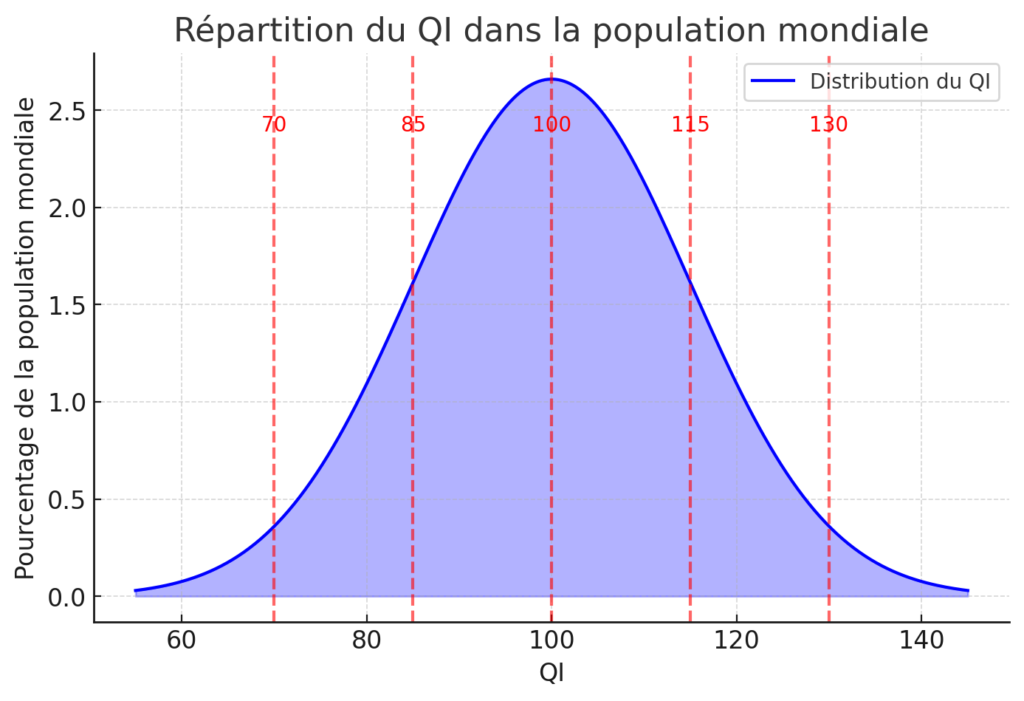
Since I need to find a job, I find myself in the situation of someone who belongs to the 25.25% of the world’s population with an IQ lower than 90, which is supposedly the IQ necessary to use a language adequately for all administrative tasks.
If I’m not completely illiterate in Japanese, I’m far from a native level when it comes to topics or subjects I haven’t covered. This goes without saying, but “instant knowledge” doesn’t exist; we only know what we’ve learned.

The point of today’s reflection is not to feel sorry for myself, but rather to highlight the difficulties that more than a quarter of the world’s population face on a daily basis.

Not being comfortable reading is not just a burden for reading but also for learning, obviously. And someone struggling in their language will face other additional difficulties, such as the fear of expressing themselves, the fear of mockery, a sense of inferiority, and self-denial.

We quickly forget these differences, and we judge too quickly, in a more general way.

Does a person not express themselves, for example, because they don’t want to, or because they can’t?

Does the fact that the vast majority of people have no issues with language mean we should disregard others? Just because they don’t have the necessary abilities to do so?

The example of language is easy to understand for an expatriate who doesn’t master the language of the country they live in.

Immigration is a complicated issue. But in very simple terms, if there is no “need” to leave one’s country in the first place, there would be no immigration.

Looking at things from a global perspective, it almost becomes obvious that to solve immigration problems, providing the necessary resources to the countries of the people who emigrate is one of the key factors.

The reasons for fleeing one’s country are diverse, of course. But extreme poverty, malnutrition, and directly linked to these, lack of education, are among the determining factors.

Anyway, I need to work on my Japanese.


Our latest tales

  • Put into Practice

    Put into Practice

    Faya, the Shape of Willpower and the Element of Fire, liked to put into practice the very principles she taught at the Great Library of Esperia. Even before learning about the StarDust—and that it required the harmonious combination of all Elements to eventually take shape through a radiant Aether Flow—Faya had always understood that practice

    Read more

  • Healthy Food

    Healthy Food

    This may sound obvious, but as you eat healthier, you become healthier. Yet, when we look at what is consumed in the wealthiest countries on our planet, it simply doesn’t make sense. Companies earning millions of dollars sell sugar-filled foods and drinks—because they sell. Why? Because adding sugar makes the product addictive, and your brain

    Read more

  • Wake up

    Wake up

    Eklea, the Shape of Awareness, pondered where to begin if a civilization had no knowledge of the Seven Shapes. Surely, neither harmony nor peace could exist in such a world. There was so much to unpack—especially for the youngest ones, who would have to absorb so much and try to discern what truly makes sense

    Read more

  • A Good Sleep for a Good Mood

    A Good Sleep for a Good Mood

    Gurumin, the Shape of Empathy and Compassion, loved to sleep. Yet sometimes, when bedtime arrived, she wanted to stay awake just a little longer to enjoy the day. But studies on sleep by Vati, the Shape of Wisdom, showed that getting proper rest each day is one of the key ingredients for maintaining a good

    Read more

  • The Values That Matter

    The Values That Matter

    At the end of one’s life, what will we regret not having done more of in our own unique journey? For many, in the modern societies of the richest nations ruling this planet—and mostly destroying its nature and our only living habitat called Earth—the regret won’t be about money, time spent working, or the possessions

    Read more

  • A Simple Life

    A Simple Life

    The development of technologies based on fossil fuels has changed the way the richest countries ruling the world live and behave. Not that anyone would rather return to the Stone Age, but when we recognize the physical limitations of planet Earth, we understand that those who will suffer are not only the forms of biodiversity

    Read more

  • Just a Little Time, but Daily

    Just a Little Time, but Daily

    Shala, the Shape of Time, understood better than anyone how powerful habits were for the Espers. To nurture their StarDust, it was important that those habits be as healthy and beneficial to society as possible. Why? Because time each day is limited, and the StarDust functions in a special way: a few minutes of daily

    Read more

  • Incoherent System

    Incoherent System

    It is now widely accepted that climate change is happening—and that its consequences are rather bleak. On top of that, we also understand that the fuels causing this crisis are limited, as are all resources on our shared planet, Earth. Meanwhile, the entire system remains rooted in a growth-oriented economy that fails to take into

    Read more